
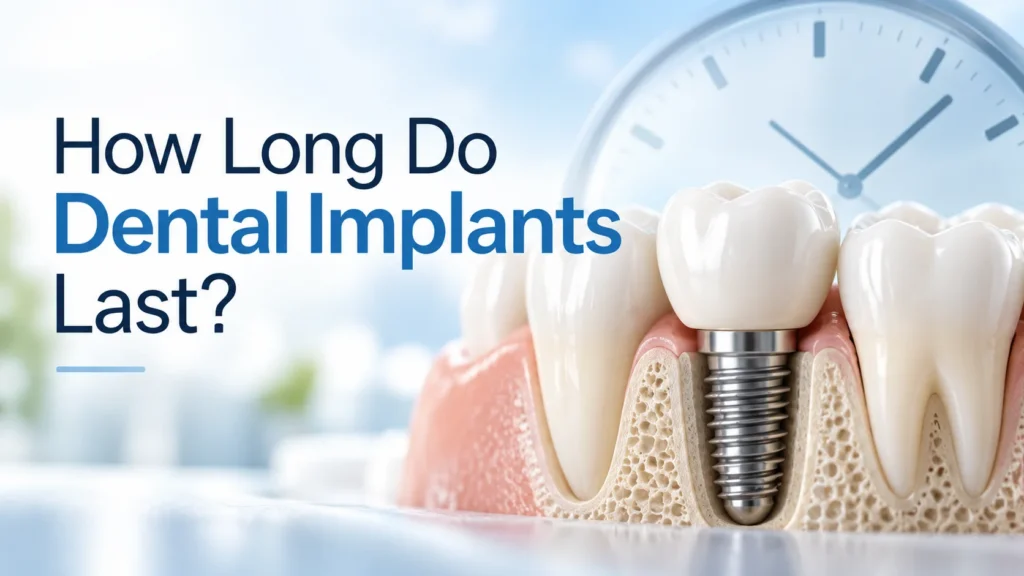
Dental implants can last 20 years or longer, and some remain functional for a lifetime. However, their lifespan varies based on gum health, bone support, oral hygiene, and daily habits. The implant fixture may last decades, while the attached crown may need repair or replacement sooner.
A systematic review published in the Journal of Dentistry reported an estimated 10-year implant survival rate of 93.2% to 96.4%, depending on the statistical method used.
How Long Do Dental Implants Usually Last?
With successful healing and appropriate maintenance, the implant fixture can remain in the jawbone for several decades.
A 10-year survival rate above 90% does not mean every implant will last that long. Individual outcomes depend on medical history, oral health, implant placement, and ongoing care.
It is also important to distinguish implant survival from implant success. An implant may remain in place but develop complications involving the surrounding gums, bone, or restoration.
Understanding the Lifespan of Each Implant Component
A typical dental implant restoration consists of three parts, each with different maintenance needs.
Implant Fixture
The fixture is a small titanium or other biocompatible implant placed in the jawbone to replace the missing tooth root. Once it integrates with the bone, it can provide long-term support for the replacement tooth.
Abutment
The abutment connects the implant fixture to the crown. Although designed for durability, it may occasionally loosen or require replacement because of mechanical complications.
Dental Crown
The crown is the visible replacement tooth used for biting and chewing. Daily wear, teeth grinding, accidental damage, or changes in the bite may eventually require crown repair or replacement.
A damaged crown does not automatically mean the implant fixture has failed. In many cases, the restoration can be repaired or replaced while the implant remains stable.
What Factors Affect Dental Implant Longevity?
1. Oral Hygiene and Gum Health
Although implants cannot develop cavities, bacteria can accumulate around them and cause inflammation.
Untreated inflammation may progress to peri-implantitis, a condition involving inflammation and loss of supporting bone around the implant.
Brushing twice daily, cleaning between the teeth and around the implant, and attending recommended dental appointments help protect the surrounding tissues.
2. Jawbone Quality and Support
Dental implants depend on sufficient healthy bone for stability.
When a tooth has been missing for an extended period, the jawbone in that area may shrink. A dentist may recommend bone grafting if additional support is needed before implant placement.
3. Smoking and Medical Conditions
Smoking is associated with a higher risk of implant complications and can interfere with healing.
Certain medical conditions, including poorly controlled diabetes, may also affect healing and the health of tissues around an implant.
Before treatment, discuss your medical history, medications, and tobacco use with your dentist.
4. Teeth Grinding and Bite Pressure
Clenching or grinding your teeth can place excessive stress on implant crowns and other restoration components.
If you have bruxism (teeth grinding), your dentist may recommend a nightguard to help protect the restoration.
5. Implant Placement and Restoration Design
Accurate implant positioning and a properly designed crown are important for long-term function.
Before placing an implant, your dentist should evaluate your gum condition, available bone, bite alignment, and neighboring teeth.
How Can You Make Dental Implants Last Longer?
To support long-term implant health:
- Brush twice daily using a soft-bristled toothbrush.
- Clean around the implant with floss, interdental brushes, or other tools your dentist recommends.
- Attend regular dental examinations and professional cleanings.
- Avoid smoking and discuss quitting support with your healthcare provider.
- Wear a nightguard if recommended for teeth grinding.
- Avoid chewing ice or using your teeth to open packaging.
- Report unusual pain, swelling, bleeding, or looseness promptly.
Signs Your Dental Implant May Need Attention
Contact your dentist if you experience any of the following:
Persistent pain: New or worsening discomfort after the healing period may indicate inflammation, excessive pressure, or another complication.
A loose crown or implant: A loose restoration may require adjustment, while movement of the implant fixture needs prompt professional evaluation.
Bleeding or swollen gums: Persistent redness, tenderness, swelling, or bleeding around the implant may indicate peri-implant inflammation.
Changes in your bite: If a crown suddenly feels too high or uncomfortable when chewing, have it examined.
Visible gum recession: Changes in the gumline around an implant may warrant evaluation of the surrounding tissues and bone.
Do not attempt to tighten or repair implant components yourself.
Dental Implants vs. Bridges and Dentures: Which Lasts Longer?
| Tooth Replacement | Longevity and Maintenance |
| Dental implants | The implant fixture may last decades, although crowns and other components can require maintenance or replacement. |
| Dental bridges | Can function for many years but may eventually require replacement because of wear, decay of supporting teeth, or other complications. |
| Removable dentures | Often require periodic adjustment, relining, or replacement as the gums and jawbone change. |
Dental implants can replace missing teeth without relying on adjacent teeth for support in many single-tooth cases.
However, implants aren’t the best option for everyone. Bone availability, overall health, treatment cost, and personal preferences should also be considered.
Are Dental Implants Worth It for Tucson Patients?
Dental implants may be worth considering if you want a fixed replacement for one or more missing teeth and have suitable oral health and bone support.
Before choosing dental implants in Tucson, patients should ask their dentist about:
- Whether their gums and jawbone can support an implant.
- Whether bone grafting or other preparatory treatment is necessary.
- The expected lifespan of the proposed implant restoration.
- The cost of future maintenance or crown replacement.
- Alternative tooth replacement options.
Frequently Asked Questions
Can dental implants last a lifetime?
Yes, some dental implant fixtures remain functional for a lifetime. However, this cannot be guaranteed. Gum disease, bone loss, smoking, and mechanical complications can affect their longevity.
Do dental implants need to be replaced every 10 years?
No. Dental implants do not have a routine 10-year replacement schedule. A stable implant may remain in place much longer. Its crown or other restoration components may require attention sooner.
Can a dental implant fail after 20 years?
Yes. Late complications can occur even after decades of successful function. Peri-implantitis, bone loss, or mechanical problems may affect an older implant.
Can dental implant crowns be replaced without removing the implant?
In many cases, yes. If the implant fixture remains healthy and stable, the dentist may replace a damaged crown without removing the implant.
Final Thoughts
Dental implants can provide decades of function, but their long-term success depends on healthy supporting tissues, appropriate treatment planning, and consistent maintenance. The implant fixture may last a lifetime, while the crown may need repair or replacement along the way. Good oral hygiene, regular checkups, avoiding smoking, and protecting your implant from grinding all help your investment last.
Not sure whether implants are right for you? An exam can show whether your gums and jawbone can support one, whether bone grafting is needed, and which options fit your goals and budget.
Ready to find out? Schedule your dental implant consultation today and take the first step toward a stable, long-lasting smile.